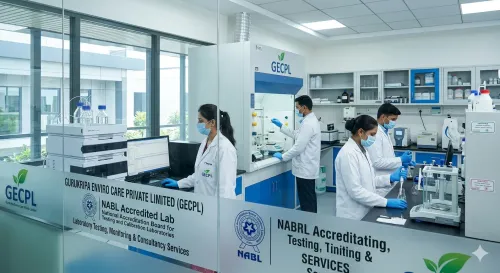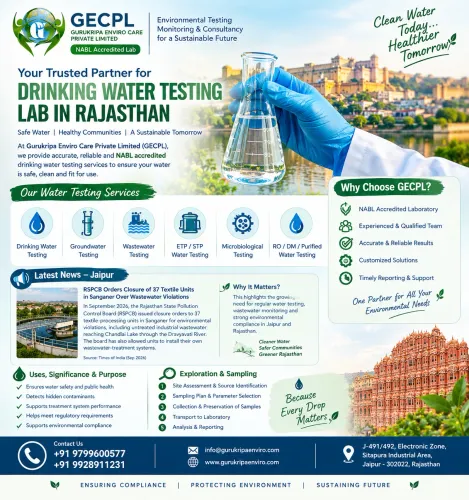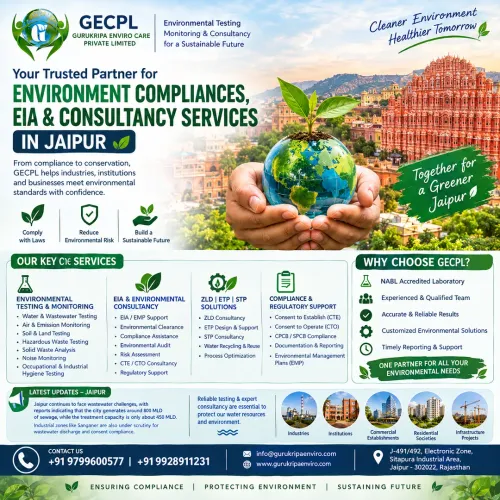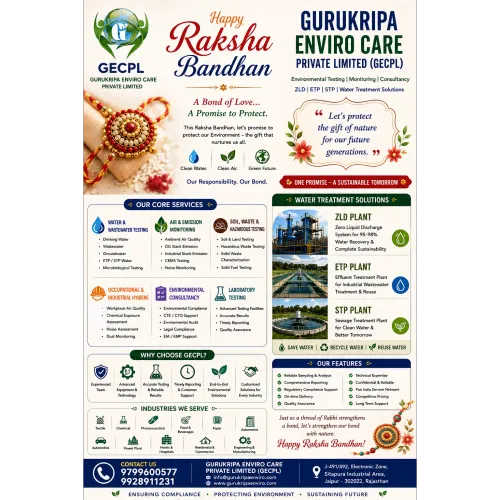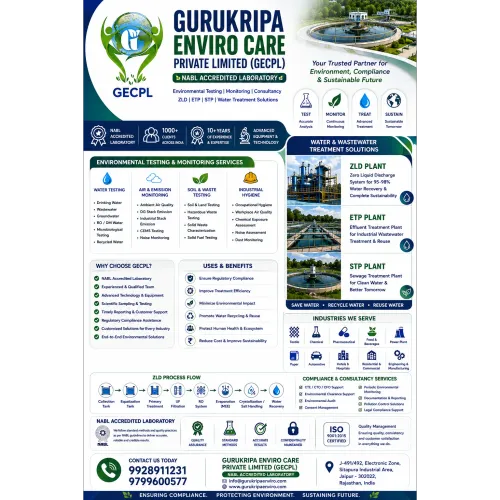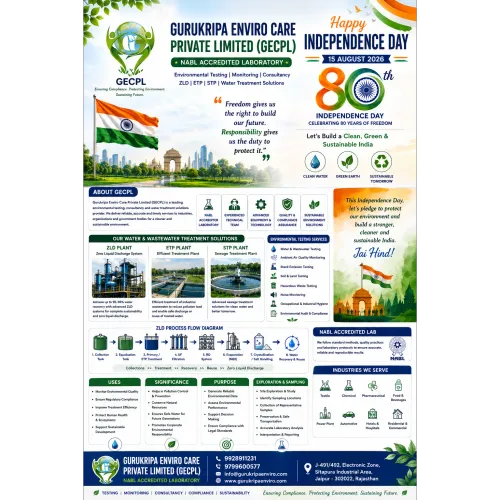

GECPL, A Environmental testing laboratories provides essential services to monitor and assess the quality of environmental elements such as air, water, soil, and sediments. These services are crucial for ensuring compliance with environmental regulations, protecting public health, and promoting sustainable practices. Below are the typical services offered by environmental testing laboratories:
1. Water Testing
# Drinking Water Analysis: Testing for contaminants like bacteria, heavy metals (lead, mercury), chemicals (pesticides, pharmaceuticals), and physical parameters (pH, turbidity).
# Wastewater Testing: Monitoring for pollutants such as ammonia, nitrogen compounds, BOD (Biochemical Oxygen Demand), COD (Chemical Oxygen Demand), and suspended solids.
# Groundwater and Surface Water Analysis: Testing for a variety of contaminants, including organic and inorganic compounds, pesticides, and hydrocarbons.
# Marine and Aquatic Toxicity Testing: Assessing the impact of water pollutants on aquatic life using bioassays.
2. Air Quality Testing
# Indoor Air Quality: Testing for pollutants like carbon monoxide, radon, VOCs (volatile organic compounds), particulate matter (PM10, PM2.5), and mold.
# Outdoor Air Monitoring: Measurement of ambient air pollutants such as ozone, sulfur dioxide (SO2), nitrogen dioxide (NO2), carbon dioxide (CO2), and particulate matter.
# Emissions Testing: Monitoring emissions from industrial processes, transportation, and other sources to ensure compliance with regulatory standards.
3. Soil Testing
# Contaminant Analysis: Testing for hazardous substances such as heavy metals, pesticides, petroleum hydrocarbons, and industrial chemicals.
# Nutrient Content: Assessing soil for essential nutrients like nitrogen, phosphorus, potassium, and micronutrients.
# Soil Health Assessment: Testing pH, texture, moisture content, and organic matter levels to determine soil suitability for agricultural purposes.
4. Sediment and Sludge Testing
# Contaminant Screening: Identifying pollutants such as heavy metals, pesticides, and organic contaminants in sediments and sludge.
# Toxicity Testing: Conducting bioassays to assess the potential harm of sediments and sludge to aquatic organisms.
5. Hazardous Materials Testing
# Asbestos Testing: Analysis of building materials, air, and dust samples for the presence of asbestos fibers.
# Lead and Other Heavy Metals: Testing for lead in paint, soil, dust, and water, especially in older buildings or in areas of concern.
# Radon Testing: Measurement of radon levels in buildings or outdoor environments to assess potential health risks.
6. Noise and Vibration Testing
# Noise Level Monitoring: Measuring noise pollution in urban, industrial, or construction areas to assess compliance with noise regulations.
# Vibration Testing: Monitoring vibration levels from industrial operations, traffic, or construction to assess potential structural damage or discomfort.
7. Ecological and Environmental Impact Assessments
# Biological Monitoring: Studying the impact of pollution on ecosystems by examining flora and fauna health.
# Ecosystem and Habitat Studies: Conducting field studies to evaluate biodiversity, species distribution, and the effect of pollutants on ecosystems.
8. Compliance Testing and Reporting
# Regulatory Compliance: Ensuring that businesses and industries meet local, state, and federal environmental regulations by conducting required testing and submitting reports to authorities.
# Environmental Permitting: Providing data and analysis to support permits for land use, industrial emissions, or water discharges.
# Environmental Impact Reports: Preparing documents that detail the potential environmental effects of planned projects, including mitigation strategies.
9. Training and Consulting
# Training: Offering education on environmental regulations, testing methods, and sample collection techniques.
# Consulting: Providing expert guidance on interpreting test results, complying with environmental laws, and mitigating environmental risks.
Environmental testing labs typically use a range of sophisticated analytical techniques, such as chromatography, spectrometry, microbiological testing, and molecular assays, to carry out these services. These tests help industries, government bodies, and communities monitor pollution levels, ensure compliance, and protect both human and environmental health.
Please Consider for any type of requirement
Thanks and Regards
Lokesh Jaswani
(Managing Director)
GURUKRIPA ENVIRO CARE PVT LIMITED
Complete Enviro Solution
Address: J-491/492, Near Chatrala Circle,
Sitapura Industrial Area, Jaipur (Rajasthan) - 302022
Email: info@gurukripaenviro.com
Mobile: +91-9928911231
Website: www.gurukripaenviro.com